
Paediatric neurology
Paediatric Neurologist in Dehradun
Fits, staring spells, headaches that wake a child at night, or speech and walking that come later than they should. These are the things parents most often bring to a child neurologist.
Dr. Amodini Walia is a paediatric neurologist and epilepsy specialist. She sees children from newborns to teenagers, and works alongside our paediatricians, PICU and NICU.
Prefer to type? Message us on WhatsApp. CGHS and most insurers accepted, cashless.
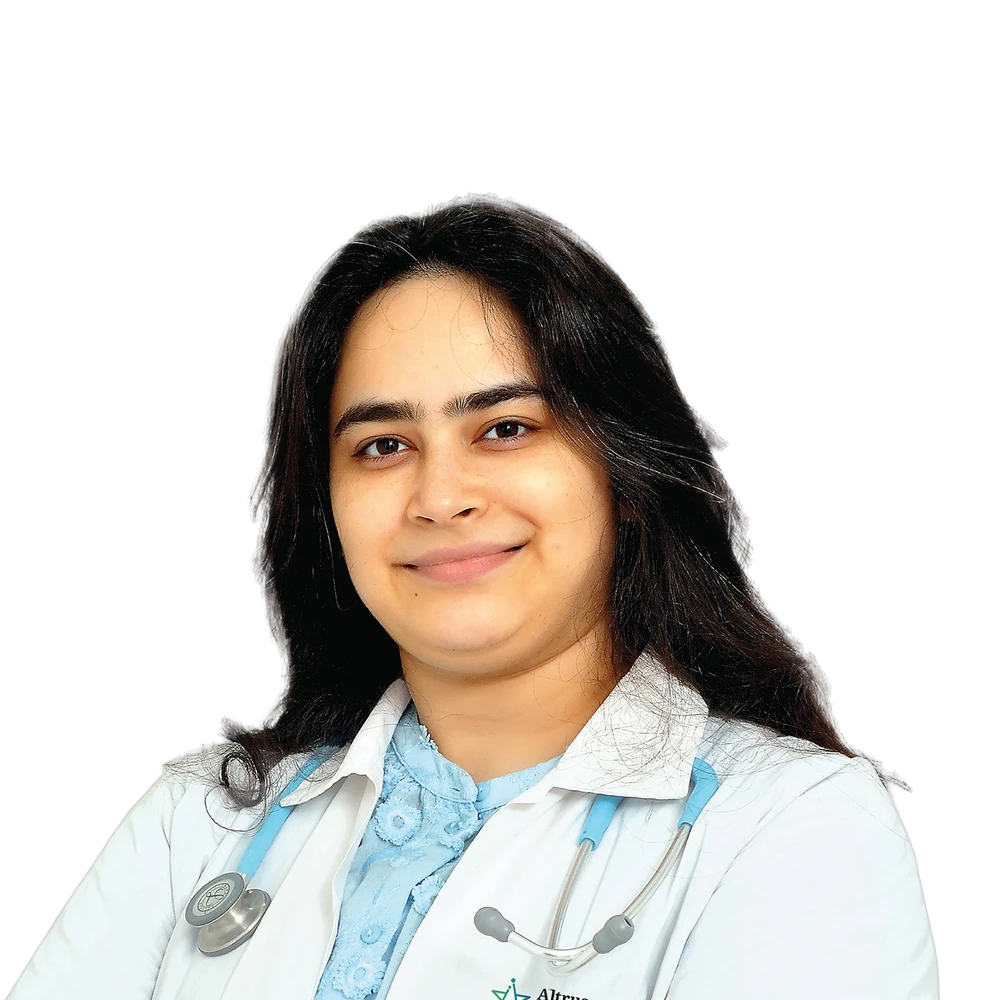
Dr. Amodini Walia, Paediatric Neurologist & Epilepsy Specialist
Altrus HealthCare, Dehradun, has a paediatric neurologist, Dr. Amodini Walia, for children with seizures and epilepsy, febrile fits, headaches, developmental delay, and weakness or unsteadiness. EEG and brain imaging can be arranged, and a 24/7 children's emergency and PICU are on site.
Parents often ask us
- My child had a fit with fever. Will it happen again?
- Is this staring spell a seizure or just daydreaming?
- My son is two and still not talking. Who should we see?
- Does my daughter need to stay on epilepsy medicine for life?
Conditions we see
A child neurologist looks after the brain, spine, nerves and muscles. These are the problems we see most often.
- Epilepsy and seizures
- Febrile seizures (fits with fever)
- Breath-holding spells
- Headache and migraine in children
- Speech and motor delay
- Cerebral palsy
- Autism and ADHD assessment
- Tics and abnormal movements
- Weakness, unsteadiness or poor balance
- Head injury follow-up
When to see a child neurologist
- A fit that lasts more than five minutes, or a second fit soon after the first. Come to emergency straight away.
- A first fit without fever, even if your child seems fine afterwards.
- Headaches with vomiting, that wake your child from sleep, or that keep getting worse.
- Losing skills your child already had, such as words, walking or hand use.
- Sudden weakness on one side, a drooping face, or trouble speaking.
Common conditions, explained
Short answers to what parents search for most: symptoms, causes and treatment.
Febrile seizure (बुखार में दौरा)
Symptoms: a fit with high fever, usually between 6 months and 5 years. The child may stiffen, jerk, roll the eyes or go limp, usually for under five minutes.
Is it dangerous? Simple febrile seizures are common, do not damage the brain, and most children outgrow them by age five. About one in three children has another one with a later fever.
Treatment: find and treat the cause of the fever. Daily epilepsy medicine is usually not needed.
Epilepsy in children (मिर्गी)
Symptoms: repeated fits without fever, staring spells, sudden jerks on waking, or brief loss of awareness that teachers notice as daydreaming.
Causes: often no cause is found. Others follow birth injury, brain infection, genetic conditions or brain malformations.
Treatment: most children are well controlled on one medicine. Attention and behaviour problems can come with epilepsy, so we check for these too.
Speech delay and developmental delay
Signs: no babbling by 12 months, no words by 16 months, no two-word phrases by 2 years, or losing words already learned.
Causes: hearing loss, autism, global developmental delay, or simply late talking.
What we do: a hearing test, developmental assessment, and referral to speech therapy where needed.
Autism (signs to watch)
Early signs: little eye contact, not responding to name by 12 months, no pointing, repetitive movements, strong upset with small changes.
What we do: a structured assessment, then a plan with therapy and school support. Early help makes a real difference.
Your doctor
All Altrus doctorsBefore you come in
- Record a video of the episode on your phone if you can. It is often the most useful thing a neurologist sees.
- Note the date, time, how long it lasted, and what your child was doing just before.
- Bring earlier EEG, MRI or CT reports and the medicines your child takes.
What Our Patients Say
Questions from parents
If your question is not here, ask us directly.
Speak to someone at the hospital
Call 0135-310-1600Are febrile seizures dangerous?
Most febrile seizures stop on their own within a few minutes and do not harm the brain. Your child should still be checked by a doctor after the first one, to find the cause of the fever.
How is epilepsy diagnosed?
Through a detailed history, an examination, and usually an EEG. Some children also need an MRI. A video of the episode helps a great deal.
Can a child grow out of epilepsy?
Many children do, depending on the type. The neurologist will tell you whether and when it may be safe to try stopping medicine.
What is the difference between a paediatrician and a paediatric neurologist?
A paediatrician looks after a child's overall health. A paediatric neurologist has extra training in the brain and nerves, and handles seizures, delays and other nervous system problems.
Who is the paediatric neurologist at Altrus Dehradun?
Dr. Amodini Walia, paediatric neurologist and epilepsy specialist. Her OPD is on Mondays, 5–7 PM. Call 0135-310-1600 to book.
Is a febrile seizure dangerous?
A simple febrile seizure is frightening to watch but is not usually dangerous and does not cause brain damage. Get your child checked after the first one, and come to emergency if it lasts more than five minutes.
Is febrile seizure genetic?
It often runs in families. A child with a parent or sibling who had febrile seizures is more likely to have them.
Cost and insurance
Cost in Dehradun
A consultation fee applies for OPD visits. Tests are charged separately. Call 0135-310-1600 for current fees.
Insurance and CGHS
Altrus is CGHS empanelled and works with most insurers and TPAs on a cashless basis. Bring your card and ID when you register.
Book a visit
Blood tests and X-rays can usually be done in the hospital the same day.
Altrus HealthCare, 19 New Road, near MKP Chowk, Dehradun. Directions
Request a call-back
Leave your number and we will call you back to fix a time.
How to reach us
Altrus HealthCare is at 19 New Road, near MKP Chowk (Race Course area), in central Dehradun.
OPD: Monday to Saturday. Emergency, NICU, PICU and ICU: open 24 hours.
Phone: 0135-310-1600 · Emergency: +91 92582 35140
Is your child having a fit right now?
Lay them on their side, do not put anything in the mouth, and come to emergency. Open 24 hours.
General information only. Please speak to a doctor about your child's situation. Page updated November 2026.