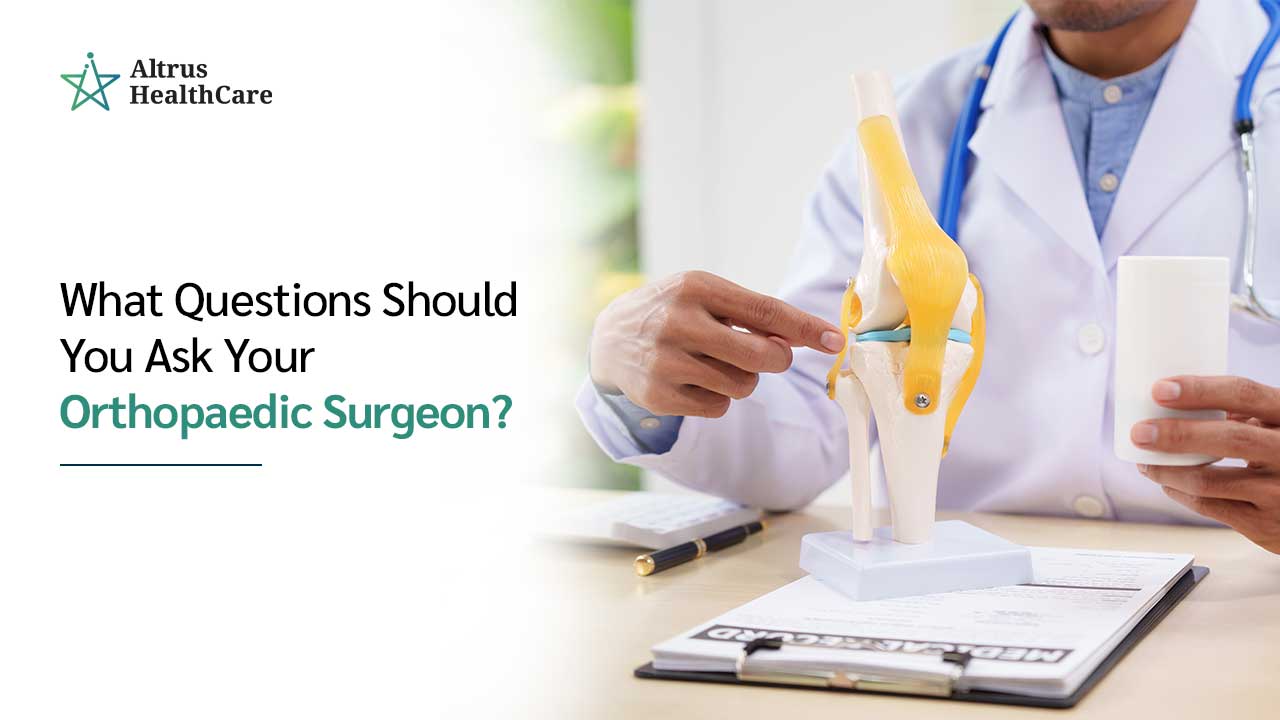
Orthopaedic surgery involves procedures used to treat problems affecting the bones, joints, muscles, ligaments and tendons. It may be recommended for conditions such as severe joint damage, fractures, sports injuries or other problems that affect movement and everyday activities. Depending on the condition, the procedure may involve repairing damaged tissues, fixing a fracture or replacing a joint, as in knee replacement surgery.
Not everyone with an orthopaedic condition will need surgery. In many cases, treatment may begin with medication, physiotherapy, rehabilitation or other non-surgical options. Surgery may be considered when these treatments are not providing enough relief or when the condition requires surgical correction.
Since the type of orthopaedic surgery and recovery can vary from one person to another, it is important to understand exactly what is being recommended and why. Here are some questions that can help you have a clearer conversation with your surgeon before moving ahead with treatment.
Why Do I Need Orthopaedic Surgery?
Start by understanding the reason surgery has been recommended. Ask your doctor to explain your condition in simple terms and tell you what problem the procedure is expected to treat.
If you have had X-rays, an MRI or other scans, ask your surgeon to explain what they show. This can help you understand whether the problem involves a damaged joint, torn ligament, fracture or another orthopaedic condition.
It is also useful to ask whether the surgery is urgent or if there is time to consider your options. An orthopaedic doctor in Dehradun can explain how your condition may progress and why a particular treatment is being recommended.
Are There Non-Surgical Treatments I Can Try First?
Surgery is not always the first option for every orthopaedic problem. Depending on the condition, treatment may include physiotherapy, medication, injections, rehabilitation or changes to physical activity.
Ask whether these treatments are suitable for you and whether they are likely to provide enough relief. Some people respond well to non-surgical treatment, while others may continue to experience pain or difficulty with movement.
This is especially relevant for someone considering knee replacement surgery. It is important to understand which treatments have already been tried and why they are no longer helping enough.
Which Procedure Are You Recommending for My Condition?
There can sometimes be more than one way to treat an orthopaedic condition. Certain knee or shoulder problems, for example, may be treated through arthroscopy, while severe joint damage may require reconstruction or replacement.
Ask your surgeon which procedure is being recommended and why it is suitable for your condition. You can also ask what happens during the surgery, what it is expected to achieve and whether there are other surgical options.
According to Dr Romesh Gaur, Orthopaedic Surgeon and Sports Injury Consultant at Altrus HealthCare:
“The decision to recommend surgery depends on the patient’s symptoms, clinical examination, imaging findings and how the condition is affecting everyday life. The aim is to choose the treatment that is appropriate for the individual patient.”
What Should I Know About Recovery Before the Surgery?
Recovery is an important part of orthopaedic surgery, and it helps to understand what the first few days and weeks may look like before the procedure.
Ask how long you may need to stay in the hospital and when you can expect to start walking or moving the affected area. You may also need to know whether crutches, a brace or other support will be required.
Recovery after knee replacement surgery can be very different from recovery after arthroscopy or fracture repair. Your surgeon can explain what applies to your particular procedure and when you may be able to return to work, drive or resume regular activities.
What Benefits Can I Expect and What Are the Risks?
Every surgery comes with potential benefits and risks, so this is an important discussion to have before making a decision.
Ask what improvement the procedure is expected to bring. Depending on your condition, the aim may be to reduce pain, improve movement, repair an injury, correct a deformity or restore function.
You should also ask about the possible risks and whether anything about your health could affect the surgery or your recovery. This can give you a clearer idea of what to expect after the procedure.
What Will Rehabilitation Involve After Surgery?
For many patients, treatment continues long after the surgery is over. Rehabilitation may include physiotherapy, exercises and follow-up appointments over several weeks or months.
Ask when physiotherapy will begin, how long rehabilitation may continue and which activities you will need to avoid. This can be particularly important after knee replacement surgery, ligament repair and sports injury procedures.
It is also a good idea to ask what kind of support you may need once you return home. If walking, climbing stairs or managing everyday tasks is likely to be difficult initially, planning ahead can make the recovery period easier.
What Should Parents Know About Paediatric Orthopaedic Care?
Children may require orthopaedic care for different reasons, as their bones and joints are still developing. Persistent limping, difficulty walking, unusual limb alignment, joint pain or frequent falls may require an assessment.
A paediatric orthopaedic specialist can evaluate the child’s condition and recommend the appropriate next step. Not every orthopaedic concern in children requires surgery. Some conditions may only need monitoring, physiotherapy or other forms of treatment.
If surgery is recommended, parents can ask how the procedure may affect the child’s growth and development, what recovery will involve and whether follow-up care will be needed as the child grows.
What Should I Expect After Leaving the Hospital?
Before undergoing orthopaedic surgery, ask what the first few days at home are likely to involve. You may need guidance on pain management, wound care, movement and follow-up appointments.
It is also important to know which symptoms should be reported to your doctor. Your surgeon can explain what is generally expected during recovery and when you should seek medical advice.
Having this information beforehand can make the transition from hospital to home easier for both the patient and their family.
What Does Orthopaedic Care at Altrus HealthCare Include?
Orthopaedic care may involve more than surgery alone. At Altrus HealthCare, patients can seek treatment for fractures, joint conditions, sports injuries and other problems affecting the bones and joints.
The hospital also provides paediatric orthopaedic care for children with bone, joint and limb-related concerns. Depending on the patient’s condition, treatment may involve consultation, non-surgical management, surgery or rehabilitation.
Make Sure You Leave the Consultation With Clear Answers
Before deciding on orthopaedic surgery, it helps to understand why the procedure has been recommended, what alternatives may be available and what recovery is likely to involve.
Do not hesitate to ask questions during your consultation. Speaking with an orthopaedic doctor in Dehradun can help you understand your condition and the treatment options available to you.
The aim is to leave the consultation knowing what the next step is and why it has been recommended.
Frequently Asked Questions
Is orthopaedic surgery always necessary for joint problems?
No. Depending on the condition, medication, physiotherapy, injections or rehabilitation may be considered before surgery.
How long does recovery take after knee replacement surgery?
Recovery varies from person to person and depends on the procedure, overall health and rehabilitation plan.
When should a child see a paediatric orthopaedic specialist?
Persistent limping, difficulty walking, joint pain, frequent falls or concerns about bone and limb development may need an evaluation.
Disclaimer: This article is for general information only and is not a substitute for medical advice or treatment. If you are facing a medical emergency, seek immediate medical attention or contact emergency services.