Short answer: A pregnancy is called high-risk when the mother or baby has a higher chance of complications, for example because of diabetes, high blood pressure, thyroid problems, twins or a previous caesarean. However, it does not mean something will go wrong. Instead, it means you will be seen more often, have extra scans and tests, and should plan to deliver in a hospital that can handle emergencies for both mother and baby.
By Dr. Anoosha K Ravi, Obstetrician & Gynaecologist, Altrus HealthCare, Dehradun.
What makes a pregnancy high-risk?
- Diabetes before pregnancy, or gestational diabetes
- High blood pressure or pre-eclampsia
- Thyroid disorders, anaemia, heart or kidney conditions
- Twins or more
- A previous caesarean section, miscarriage or preterm birth
- Mother’s age under 18 or over 35
- Pregnancy after IVF or fertility treatment
- Problems found on scans, such as low fluid, placenta issues or slow baby growth
How is care different?
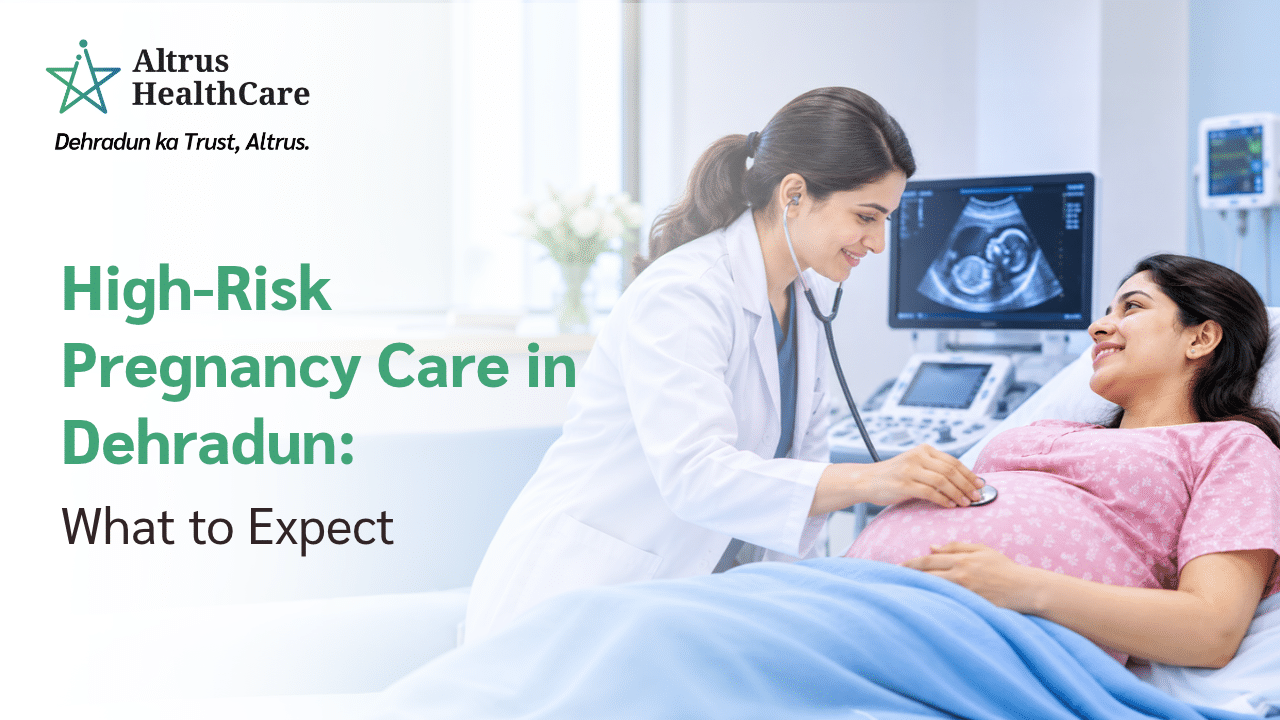
- More frequent check-ups to track blood pressure, sugar levels and the baby’s growth.
- Extra scans and tests, such as growth scans, Doppler studies and blood tests at set points.
- A delivery plan made early, including timing, whether normal delivery is safe, and pain relief options.
- A team approach: your obstetrician may involve a physician, endocrinologist, anaesthetist or newborn specialist.
Warning signs: go to the hospital straight away
- Bleeding or leaking fluid from the vagina
- Severe headache, blurred vision or swelling of the face and hands
- Strong or regular pain or tightening before 37 weeks
- Your baby moving less than usual
- Fever, fits or breathlessness
In other words, do not wait for your next appointment if any of these happen. Severe headache, blurred vision and sudden swelling can also be signs of pre-eclampsia (NHS), which needs urgent care.
What to look for in a hospital
For a high-risk pregnancy, it therefore helps to deliver where a 24-hour labour room, an anaesthetist for emergency caesarean, blood bank access, an adult ICU and a newborn intensive care unit are all available, ideally in the same building.
High-risk pregnancy care at Altrus HealthCare
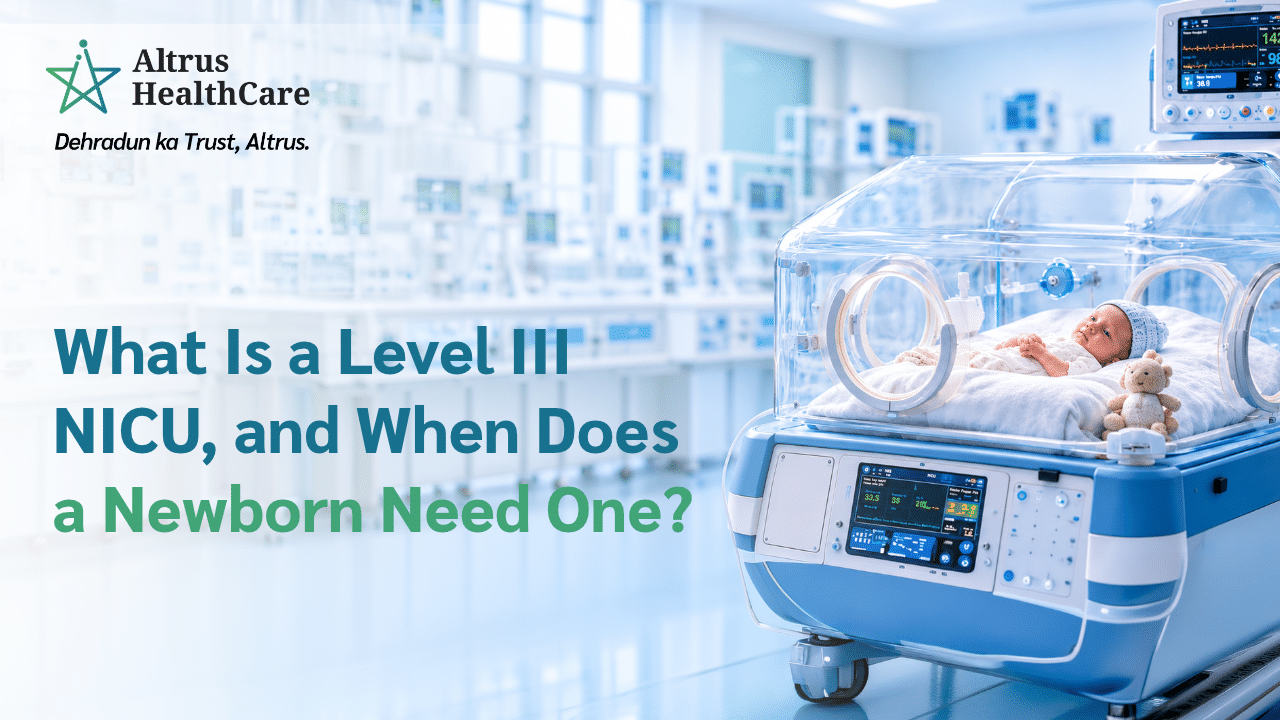
At Altrus HealthCare, New Road, Dehradun, high-risk pregnancies are looked after by our team of five women obstetricians and gynaecologists, with scans and lab tests in the building, a 24-hour labour room, anaesthetists round the clock and a Level III NICU next to the labour room. See our maternity and gynaecology page or Dr. Anoosha K Ravi’s profile.
To book a visit, call 0135-310-1600. In an emergency, call +91 92582 35140.
Sources
- NHS, Pre-eclampsia
- NHS, Gestational diabetes
This article is general information and not a substitute for advice from your own doctor.